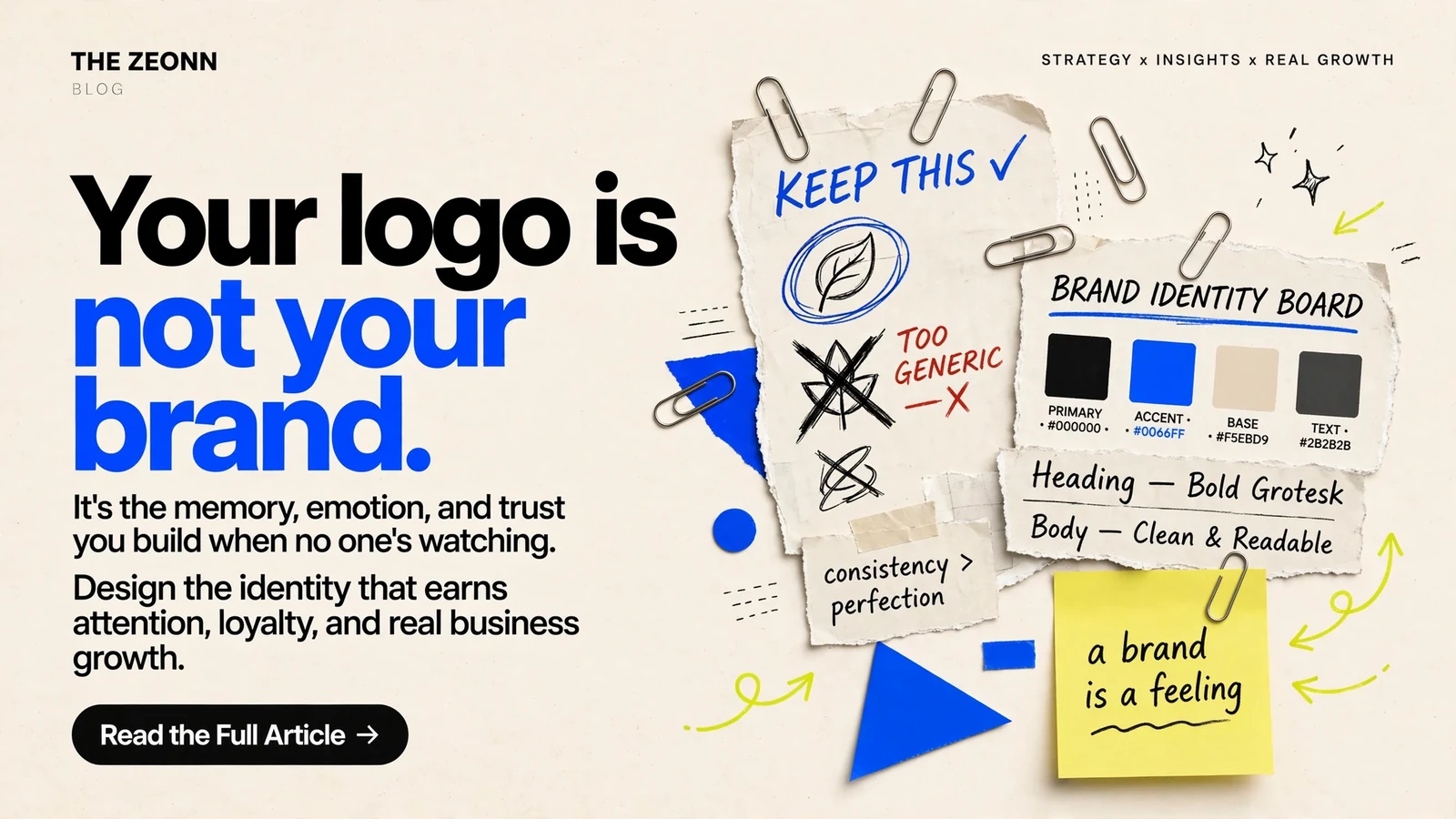
A logo is a label. A brand is the reason someone picks you before comparing prices. Here is what actually builds that, backed by the numbers.
Ask a business owner what their brand is and most will describe their logo. The colors. The font. Maybe the new icon they paid for last year. That is not a brand. That is stationery.
A brand is the set of expectations living in a customer's head before they ever talk to you. It is why one plumber gets called first and another competes on price. The logo is just the label on the box. This article is about the box.
Consistency compounds
The single most repeated finding in branding research is almost boring: show up the same way everywhere, and you earn more. A third of businesses report revenue boosts of twenty percent or more from brand consistency alone, according to 2024 research. The mechanism is simple. Every consistent touchpoint, your website, your invoices, your van, your Instagram, deposits a little more familiarity. Familiarity becomes trust.
And trust has a price tag. Eighty-one percent of consumers say they need to trust a brand before they buy from it, and eighty-seven percent will happily pay more for a brand they trust. Your logo did not do that. Your repeated behavior did.
What a brand actually consists of
Strip away the design vocabulary and a brand is four things:
1. A clear promise. What do customers get, in one sentence, that they cannot quite get elsewhere? Not "quality service". Something specific enough to be wrong about.
2. A recognizable voice. The way you write emails, answer the phone, and caption posts should sound like the same person. Most small businesses sound like five different people.
3. Consistent visuals. Yes, the logo matters here, but only as one instrument in the orchestra. Colors, photography style, spacing, and typography all need to agree with each other across every surface.
4. Repeated proof. Reviews, finished work, before-and-afters, testimonials. A brand is a claim; proof is what makes the claim believable.
The cautionary tale everyone should know
In 2009, Tropicana redesigned its iconic orange-juice carton. Cleaner, more modern, designed by a serious agency. Customers did not recognize it on the shelf. Sales dropped twenty percent in two months, costing around thirty million dollars in lost revenue, plus the thirty-five million spent on the rollout. Tropicana brought the old packaging back within weeks.
The lesson is not that redesigns are bad. It is that a brand lives in customers' habits, not in designers' portfolios. Change what people recognize and you pay for the confusion.
The brand doom loop
A 2026 Gartner survey of senior marketing leaders found that eighty-four percent of companies are stuck in what it calls a "brand doom loop": they underinvest in understanding their brand, lose confidence in it, and then fund it even less. Companies in the loop are half as likely to beat their growth targets.
Small businesses fall into the same trap at a smaller scale. Branding feels like a luxury for later, so every touchpoint improvises, so nothing compounds, so marketing always starts from zero.
Where to start
You do not need a rebrand. You need alignment. Pick your promise, write it down, then audit everything a customer sees in a week: website, social profiles, quotes, emails, signage. Make them agree with each other. That single exercise does more for most businesses than any new logo ever will.
A logo makes you recognizable. A brand makes you chosen. Build the second one first.