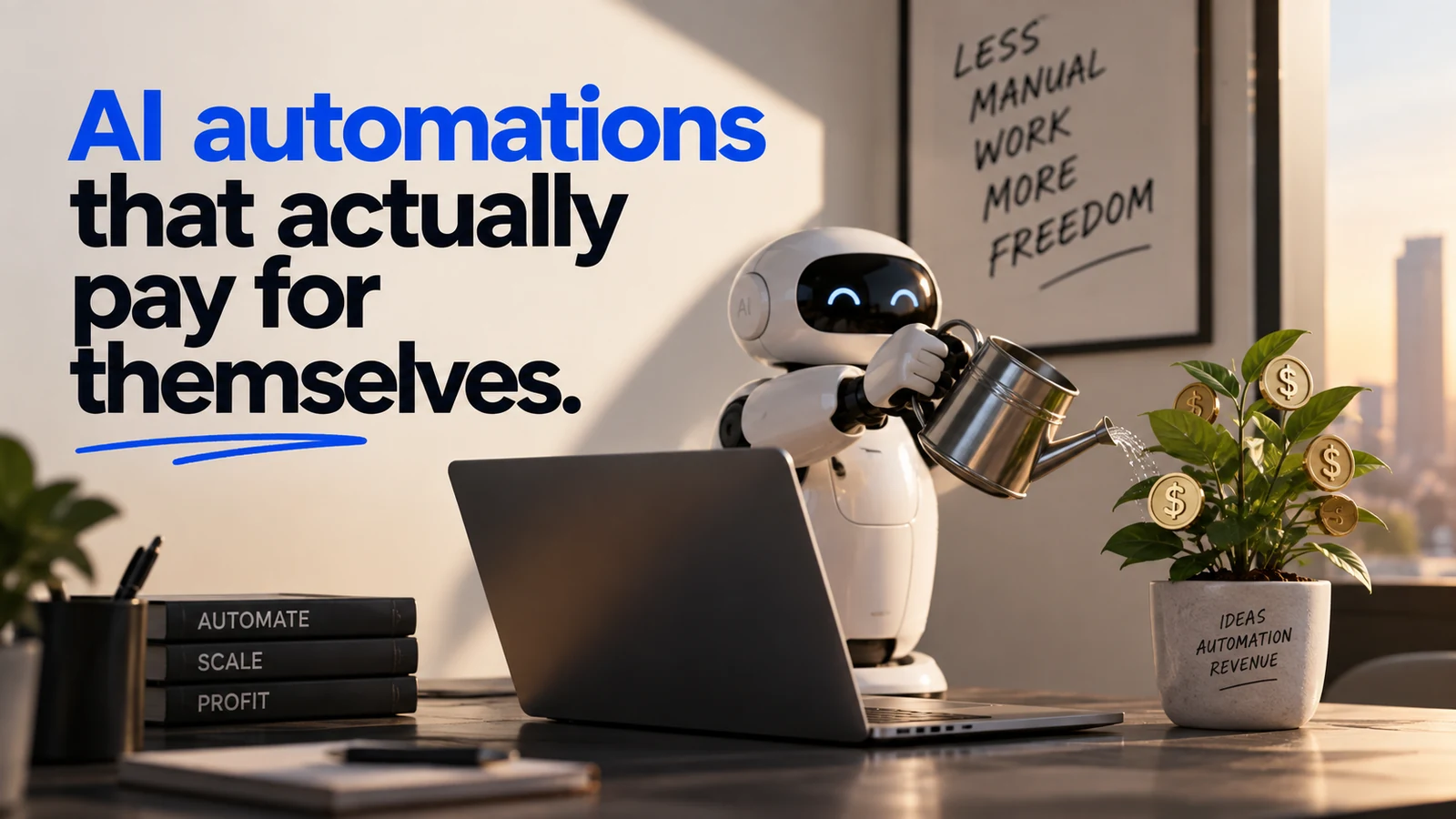
Forget the hype. These are the automations with real payback periods: instant lead response, review engines, and the quiet systems saving owners twenty hours a month.
AI is everywhere in 2026, which means most of it is noise. Chatbots that frustrate customers. "AI-powered" features nobody asked for. Dashboards full of metrics nobody acts on.
Here is the filter that matters: does it save hours or make money? These automations do both, with payback periods measured in months, not years.
The five-minute rule
The highest-ROI automation in any service business is also the simplest: respond to new leads instantly.
Leads contacted within five minutes are roughly twenty-one times more likely to become qualified than those contacted after thirty minutes. Research published via Harvard Business Review found businesses responding within five minutes are nearly four times more likely to convert the lead. In real estate, seventy-eight percent of buyers end up working with the first agent who responds.
And almost nobody does it. The median B2B response time is around forty-two hours. Two-thirds of companies take over an hour. Only about seven percent ever hit the five-minute window.
An AI system that qualifies a new enquiry and books the call within sixty seconds, at 2am on a Sunday, beats nearly every manual process on earth. This is not futuristic. It is a solved problem, and it is the first automation any business should buy.
The 24/7 receptionist
An AI voice or chat agent that answers common questions, takes bookings, and hands the tricky stuff to a human. Not a replacement for your team. A shield for their time.
The math is straightforward. If your staff spends even an hour a day answering "what are your hours" and "how much does it cost", that is twenty-plus hours a month of skilled labor spent on copy-paste. Businesses using AI report exactly that scale of savings: fifty-eight percent save more than twenty hours a month, and two-thirds save between five hundred and two thousand dollars monthly.
The review engine
Reviews are the closest thing to free marketing, and most businesses collect them by accident. An automated follow-up after every job, asking happy customers for a review and routing unhappy ones to you privately, compounds month after month. Given that most buyers now check AI summaries and review profiles before calling anyone, this quiet system punches far above its cost.
The follow-up machine
Most quotes die in the inbox, not on price. Automated, human-sounding follow-ups at day two, day seven, and day twenty-one recover jobs you already paid to win. No new leads required. Just the ones you were already losing.
The content repurposer
One job completion, one customer question, one site visit: each contains a week's worth of social posts, a blog draft, and a review request. AI turns one piece of real-world proof into all of them in minutes. This is how small teams publish like big ones.
What the numbers say overall
Industry research puts the average return on AI automation investment at around two hundred and fifty percent within the first eighteen months, with payback typically landing between six and eighteen months. Small-business AI adoption jumped over forty percent in a single year. The early adopters are not experimenting anymore. They are compounding.
What to skip
Anything that needs a human to babysit it. Anything sold as "AI-powered" without a clear before-and-after in hours or revenue. And anything that touches an angry customer without a human escape hatch. Automation should remove work, not create new kinds of it.
Start with the lead response. It is the cheapest, the fastest to pay back, and the one your competitors are still sleeping on.