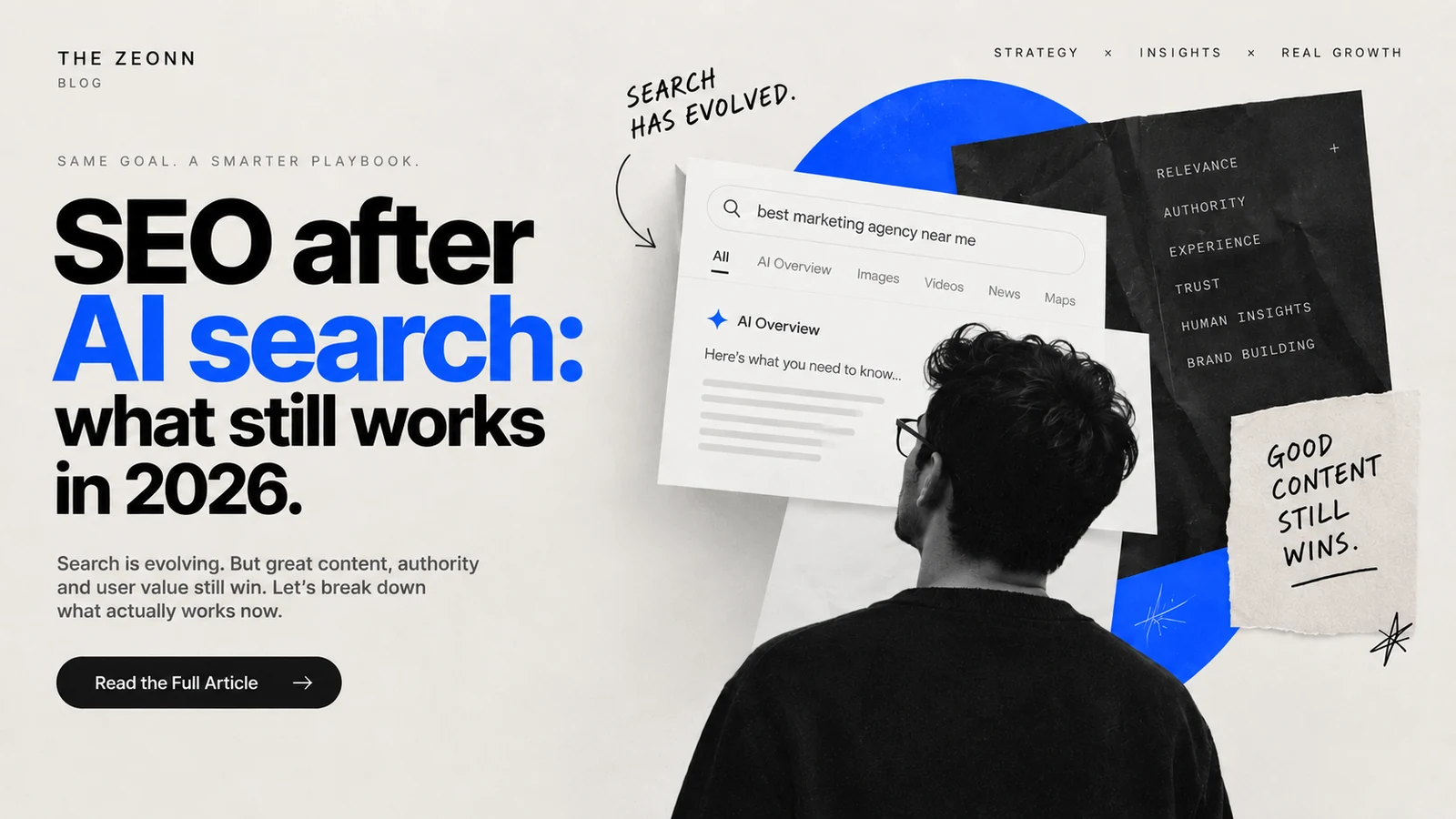
AI answers now eat most Google clicks. Ranking first is no longer the prize. Being the source the AI quotes is. Here is how the game changed and how to play it.
For twenty years, SEO had one simple goal: rank first, get the click. That era is over. Google now answers a huge share of searches directly with AI summaries, and the click you spent years earning increasingly never happens.
This is not a prediction. It is the current scoreboard.
The zero-click reality
By mid-2025, nearly seven in ten Google searches ended without a single click to any website, up from just over half before AI Overviews launched. AI Overviews themselves went from appearing in roughly fifteen percent of searches to over forty percent within a year, while Google's AI Mode grew from 126 million visits to 279 million in under twelve months.
And when people do use AI search, almost nobody leaves. In one large study of AI Mode sessions, only six to eight percent led to a visit to an external website. Pew Research found that users clicked a traditional result in only eight percent of searches that showed an AI summary, versus fifteen percent without one.
Read that again. The prize for ranking well is shrinking. The new prize is being quoted inside the answer.
What the AI actually cites
Here is the good news: AI answers are not made up from thin air. They cite sources, and the pattern of what gets cited is clear from a 2025 study of nearly seven million AI citations.
YouTube is the single most-cited source in AI Overviews. After that come Reddit, Facebook, and Quora, real humans discussing real things. And crucially, eighty-six percent of AI citations come from brand-controlled assets: forty-four percent from first-party websites and forty-two percent from business listings.
Translation: the businesses that publish clear, factual, genuinely useful content on properties they own are the ones the AI quotes. The game did not disappear. It moved one layer up.
What to do about it
1. Write to be quoted, not just to rank. AI systems lift clean, factual sentences. Short paragraphs that directly answer a question, real numbers, clear definitions. If your content reads like it was written to impress Google 2015, rewrite it for a reader who will never visit your page.
2. Own your surfaces. Your website's service pages, your Google business profile, your YouTube channel. These are the assets AI cites. A business with thin, vague website copy is invisible to AI search no matter how old the domain is.
3. Publish where humans talk. Reddit threads, Facebook groups, Quora answers in your niche get cited because they contain specific experience. One genuinely helpful answer in the right community can outrank a year of blog filler.
4. Make video. YouTube being the top-cited source is the loudest signal in this whole shift. Short, direct videos answering customer questions do double duty: humans watch them, and AI quotes them.
5. Stop chasing traffic, start chasing mentions. The metric that matters now is how often your brand appears inside AI answers in your category. Ask ChatGPT, Gemini, and Perplexity who they recommend for what you do. If you are absent, that is your new SEO audit.
The bottom line
SEO is not dead. It changed shape. The businesses winning in 2026 are not the ones with the most keywords. They are the ones with the clearest answers, published on properties they control, in formats AI systems can quote. Be the source, and the clicks that remain will find you.